
I previously wrote about the ship of Theseus and what implications that has on an organization such as the Mormon Church. Here’s a quick recap: if a thing is altered and changed, but bears the same name, is it the same thing? I postulated that organizations when they make significant changes are not inherently the same.
Today I want to look at covenants from a similar perspective. Let’s dissect covenants and the impermanence of a person’s identity and what implications that has on leaving or staying in the Mormon church after a faith transition.
Lifelong Covenants
In the Mormon Church, we make lifelong covenants. Out of respect I won’t cover the temple covenants, and I’ll stick to the baptismal ones. Below is a list of the promises made from either side on this covenant.
Member Promises
- Take upon yourself the name of Christ.
- Keep the Commandments
- Serve the Lord until the end of your life
God’s Promises
- Constant Companionship of the Holy Ghost
- Remission of Sins
- Being Born Again
This covenant in the Mormon Church also has some unstated promises. This covenant implies that the member will stay faithful to the church for the rest of their lives. If you do not endure to the end, the covenant is invalid. If you change your mind about which church has all the truth, from the Mormon perspective the covenant is invalid. You may see where I’m going with this.
The Russian Nobleman
Let’s do a thought experiment to better understand the idea of impermanence in a person’s identity. After the thought experiment we’ll cover a real world example.
In several years, a young Russian will inherit vast estates. Because he has socialist ideals, he intends, now, to give the land to the peasants. But he knows that in time his ideals may fade. To guard against this possibility, he does two things. He first signs a legal document, which will automatically give away the land, and which can be revoked only with his wife’s consent. He then says to his wife, ‘Promise me that, if I ever change my mind, and ask you to revoke this document, you will not consent.’ He adds, ‘I regard my ideals as essential to me. If I lose these ideals, I want you to think that I cease to exist. I want you to regard your husband then, not as me, the man who asks for this promise, but only as his corrupted later self. Promise me that you will not do what he asks.
Derek Parfit, Reasons and Persons, 1984
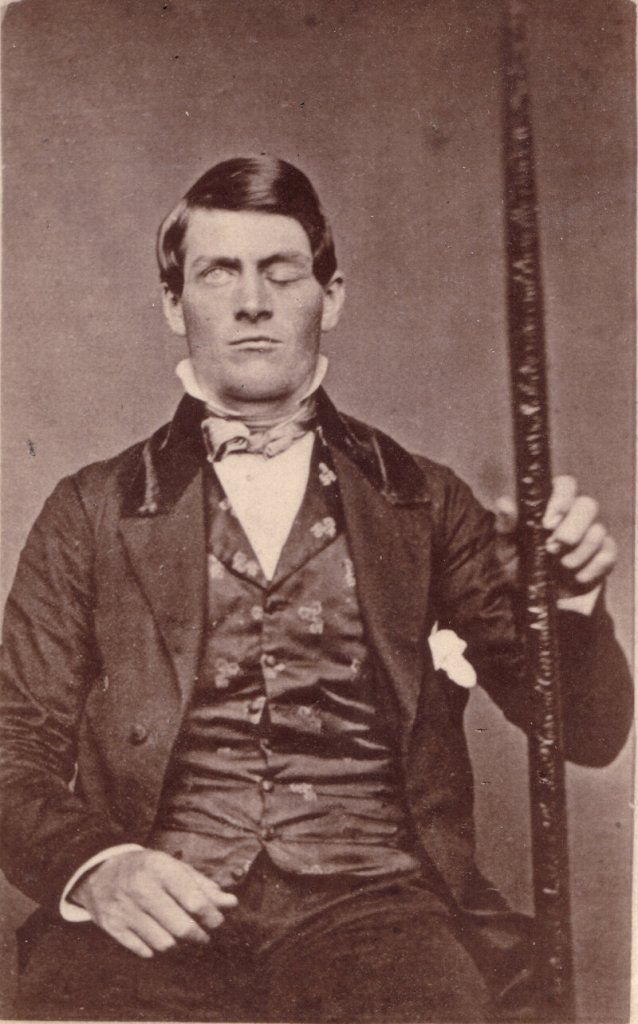
Phineas P Gage was a railroad worker born in 1823 that suffered a terrible accident that left his left frontal love and eye destroyed. Amazingly it did not kill him, but it was not without effect his personality. Before the accident he was a well-liked and friendly person, but after the accident his personality changed dramatically for the worse. For the last twelve years of his life, his friends no longer thought of him as the same person.
Now that we’ve examined it from one perspective, let’s think about it from the opposite side. If in either of these cases the change had been for the better, would their family and friends still consider them the same person?
The narrative in the Mormon church goes like this. When a non-member learns about the church and is baptized they are praised for their courage in changing their faith, but when a member changes their faith they are belittled and decried as fallen. How are these two scenarios different?
Impermanence and Covenants
There is not a single person alive today that holds all the same beliefs as they did as a child. Not a single person that loves the same person they loved as a child. Even as an adult, when marriages end in divorce, you cannot say you never loved the person. Just because it is no longer true does not make it false from the past. It was true love for you at the time.
Should a person be held accountable for their covenants when they later learn uncomfortable truths about the church? Members often say they broke their covenants with God, but that idea is only valid if people are static creatures. We need to divorce ourselves of the concept that promises made in our youth need to hold true into adulthood.
I made a promise to a girl when I was fourteen that, if neither of us were married at thirty we would look each other up and get married. We both promised. What if when we got back together at thirty, we were completely incompatible people? Should I stick to the promise I made in my youth?
The same logic follows with the Mormon Church. As an adult, I learned it is not the sole proprietor of truth. Should I force myself to stay involved in an organization that I disagree with because of promises I made as a child?
 scarltondyer.com
Leave a comment