
After what the church calls a faith crisis, progressive and post mormons face a variety of issues. I want to cover the frustration that we feel when speaking with friends and family that still believe. After putting in years of research and finally deciding that it doesn’t work, how do you respond to those around you? Do you shove facts, details and citations down their throat? Does that even work?
My wife and I disagree on this subject and we’ve discussed it at length. There are facts and details that she cannot refute, but regardless she chooses to stay. It’s her choice. I cannot force her to change her mind. My son recently “chose” to be baptized. He and I discussed why I disagreed with his “choice” at length, but we ended the conversation in a very healthy way. Even though I disagree I still love him and no choice that he ever makes will change that.
Why Can’t They See Reason?
Perhaps the biggest frustration for anyone that leaves the church is reconciling the fact that none of their family or friends can see through the deceit. With ample evidence available for free on the internet, why don’t more people research. If you sent the CES letter to a friend or loved one, did it have any impact? I’d posit that it most likely changed nothing.
There is a sense of irony in this feeling. How long ago was my judgment clouded? I recently had an old acquaintance reach out to me. We had an interesting conversation. Check out the podcast for more details there. He often wondered when we worked together why I couldn’t see the church for what it was. If I look at myself honestly, I can’t blame other people for not seeing the truth that was hidden from me for so long.
I have a philosopher that might offer a bit of insight into this.
Rose-Tinted Glasses
Immanuel Kant, born in 1724 in East Prussia, now Germany, was an enlightenment scholar that pushed back against the popular ideas of reality and metaphysics of his day. He wrote a few books in the late 18th century that dramatically influenced the way western culture thought.
Quick definition before the quote. He uses the term A priori twice. A quick definition of the term is knowledge from theoretical deduction through observation or experience. He’s referring to the concept of how we know what we know.
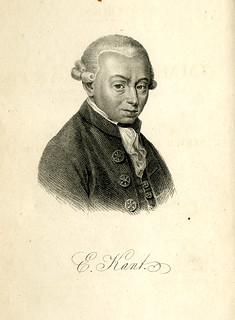
“If the intuition must conform to the nature of the objects, I do not see how we can know anything of them a priori. If, on the other hand, the object conforms to the nature of our faculty of intuition, I can then easily conceive the possibility of such an priori knowledge.”
Immanuel Kant, Critique of Pure Reason
We cannot comprehend a thing without it conforming to the nature of our intuition. Here’s an example that Kant never used, but is often used to explain what he means by this.
Imagine you are born with green tinted glasses over your eyes and you are never able to take them off for your whole life. Every visual input is tinted green before you can perceive it. The entire world is therefore green to you. If you don’t know you’re wearing glasses and you have no way of taking them off, the world is objectively green to you.
Mormon Tinted Glasses
Let’s take that concept and apply it to Mormonism. As Mormons we are born with Mormon tinted glasses. We see the world through a Mormon lense. Everything we learn we understand in the context of Mormon theology. Every new concept is green to keep with the earlier idea.
At one point in my life, I took off those Mormon tinted glasses and allowed myself to consider the evidence from a fresh perspective.
This is why your friends and family will not listen to you. This concept is what holds them back from understanding your perspective. You cannot force anyone to change. The only person in your life that you can influence is yourself. Give up on the idea of making them see reason and live your own life. When or if the person is ready, they will take off the Mormon tinted glasses and see the world from a new perspective?
Conclusions
Here’s where you might be upset with me. Oftentimes when we leave one system of thought, we quickly jump right into a different one. That might be political, philosophical or religious. It could be patriotism. Whenever we look at the world through any lense, everything lines up with our predetermined suppositions.
After leaving a fundamentalist religion, it is easier to pick apart the organization that you left, what about the other organizations that you’re still a part of. This will be the subject of my next post. How do we know what to keep and what to get rid of in our lives.
 scarltondyer.com
Leave a comment